The new Swatch x MoMA releases offer fresh proof that watches can be a work of art
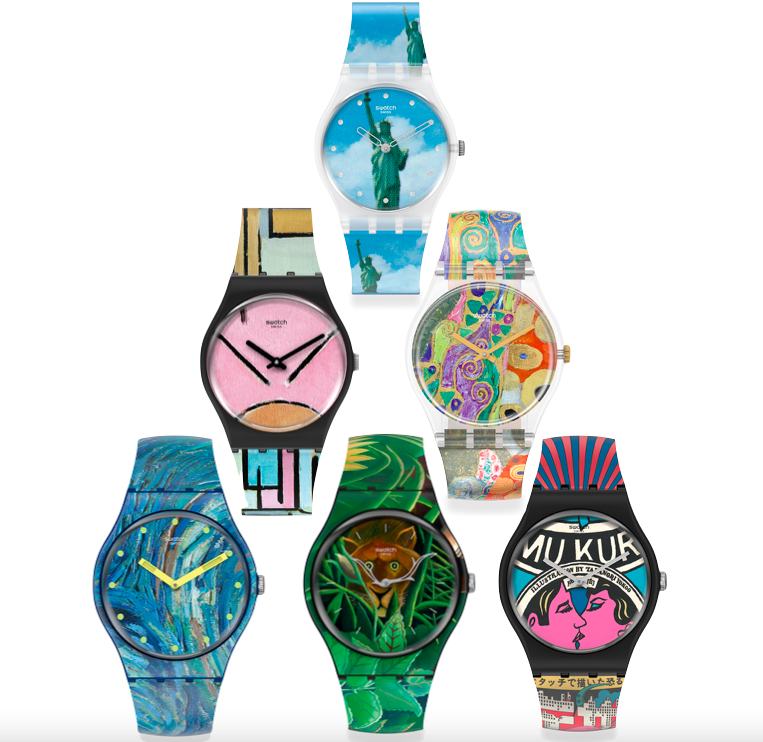 When you think of art in watchmaking, your mind probably turns to the painstaking creation of a cloisonné enamel dial for a Patek Philippe World Time, or the engraving of an A.Lange & Söhne balance cock. But art in watchmaking suddenly got a whole lot more accessible thanks to the Swatch x MoMA collection that was announced this week. This is the second time that MoMA and Swatch have joined forces, the first being when the watchmaker and the gallery produced three watches in the year 2000. In the latest Swatch x MoMA collection, there are six new watches, each of which depicts a different artwork that resides in the MoMA collection. The artworks include The Starry Night (1889) by Vincent van Gogh, Hope, II (1907-08) by Gustav Klimt, The Dream (1910) by Henri Rousseau, Composition in Oval with Color Planes 1 (1914) by Piet Mondrian, The City and Design, The Wonders of Life on Earth, Isamu Kurita (1966) by Tadanori Yokoo and New York (1968) by Tadanori Yokoo. If you’re a fan of the entire collection, it will be available for sale in a special box set, that includes a description of each artwork and the artist behind it.…
The post The new Swatch x MoMA releases offer fresh proof that watches can be a work of art appeared first on Time and Tide Watches.

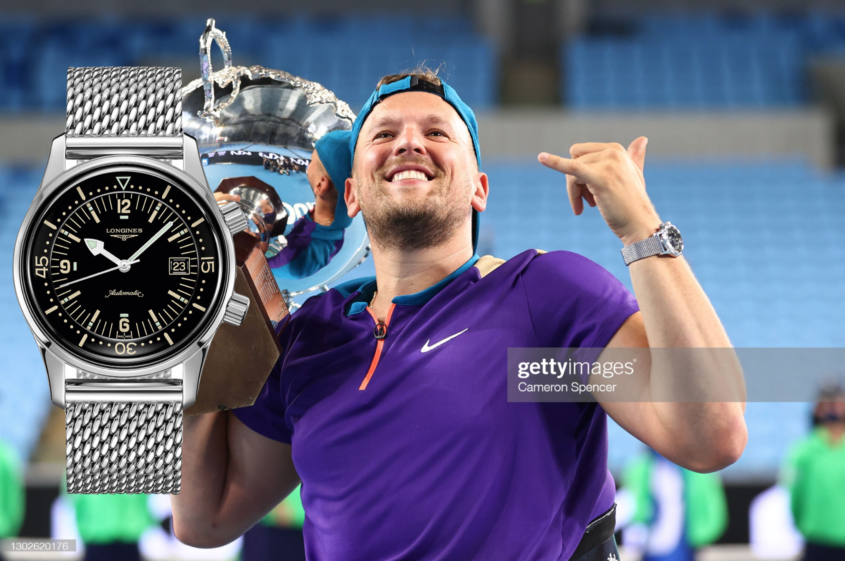 Despite the five day lockdown, when we were heading into this time last week, life in Melbourne is generally very good. The Australian Open has been thundering along at full steam with some seriously good matches being played, summer is finally here with blue skies as far as the eye can see and life is slowly returning to normal. And while the international visitors are dominating much of the current headlines, it has been a great Australian Open for local players too. Dylan Alcott continued his unrelenting domination of wheelchair tennis with his seventh straight Australian Open title. Yep, you read that right, seven local Grand Slam wins in a row. His 6-1, 6-0 victory was never in doubt, and capped off a very successful week in which he also won the quad double’s title for the fourth year in a row. Australian success continued with Matt Ebden and Samantha Stosur shining in the mixed doubles making it to the semifinals without dropping a set. Matt commented on their progress so far, saying, “Obviously we know we’re both accomplished players … singles, doubles, mixed doubles. We sort of know what we’re doing out there. Now we know how to do…
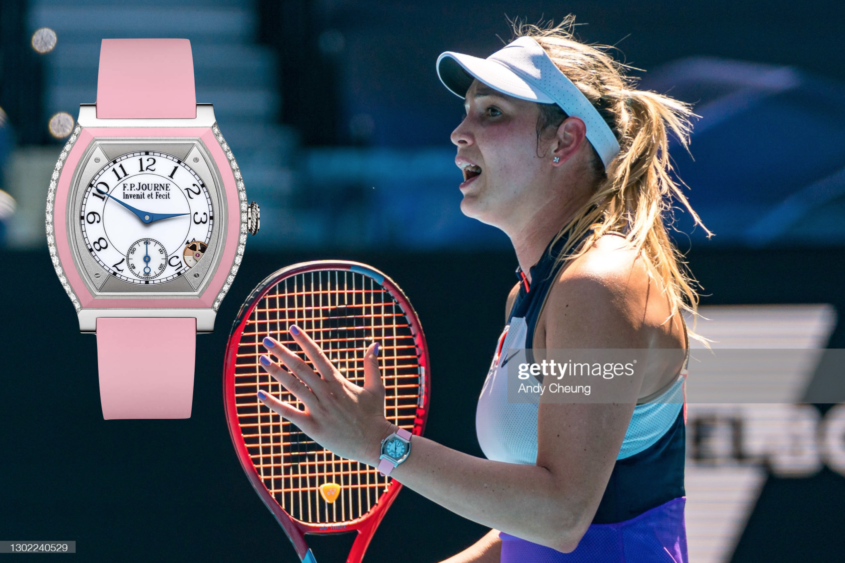 The 2021 Australian Open is edging towards its climax in Melbourne after the players and their respective teams completed a mandatory two weeks of quarantine. It’s been controversial. It’s been far from ideal, with a 5-day statewide lockdown intervening mid-comp until just yesterday. But it’s been on. And that’s what matters. In this post-COVID era it’s borderline miraculous to see a major sporting tournament being held, and how brilliant it was to see spectators back in the stands for games. And where there are tennis players, there are watches. As you would be aware, some of the players have agreements in place with various watchmakers, with some wearing their watches while playing and the majority popping a timepiece on their wrist after a match or for press conferences. Four players wear timepieces while playing and these watches are visible at all times while they are on the court. Rafael Nadal, the 20 time grand slam champion is the most notable, with his specially designed Richard Mille RM 27-04 Tourbillon, which is able to withstand the Spainards’ brutal groundstrokes. Nadal was knocked out in the quarter finals, after an epic 5 set match against Stefanos Tsitsipas. American Serena Williams, the 23 time…
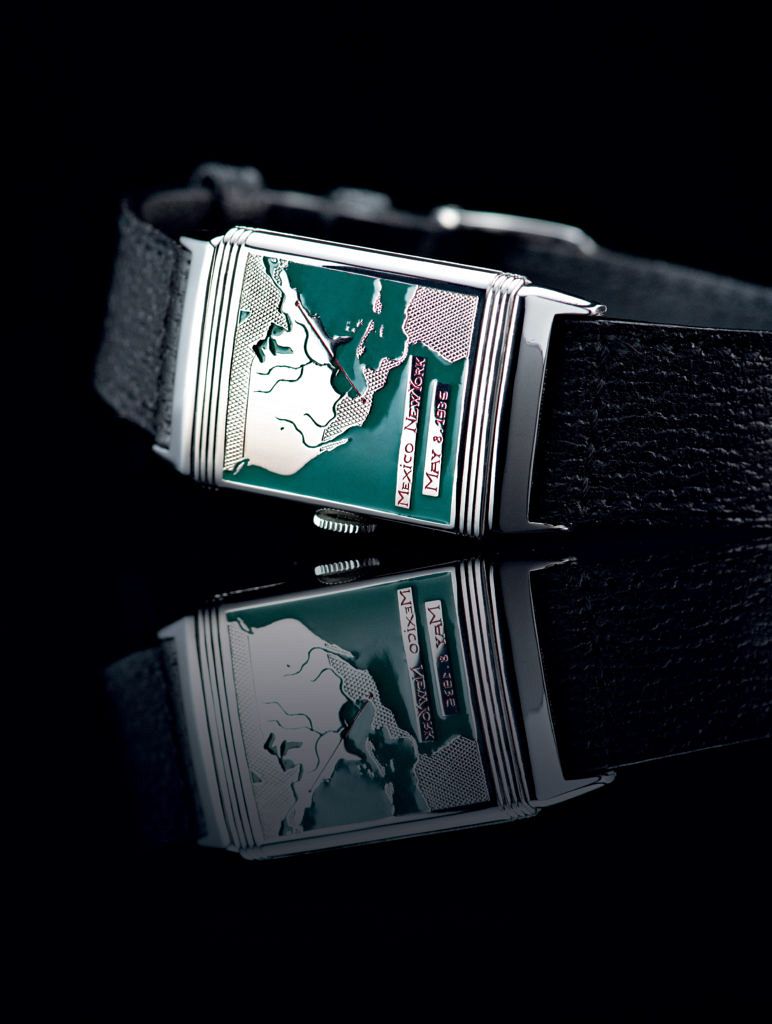 Rectangles, what do they mean? According to whiteriverdesign.com, these shapes represent stability. In fact, the rectangle is the most commonly used area shape in logo design. The reason for its popularity, apparently, is that it is a trusted familiar shape that represents honesty, solidity and stability. As squares and rectangles have straight lines and right angles they have a very mathematical, balanced feel. These shapes scream rationality, practicality and conformity. Rectangles are neither flashy nor attention-seeking – some may even venture they are boring – but clever designers will twist or turn them to add interest to a design. Enter the Reverso book from Jaeger-LeCoultre. That final idea of added interest is poignant when we are considering the Reverso. The fundamental concept of the Reverso rectangular case being able to turn, makes it in addition to its balanced design, a talking point. And not to mention a space for interpretation, complications and case art, from a simple monogram to lacquerwork and miniature art, something JLC has shown us over the years. Though starting out as a purely protective measure for polo players in the early 20th century, the Reverso presents another face that can remain minimalist, decorated or even surprise…


