The democratisation of ceramic bezels is complete, you can now buy one for $10
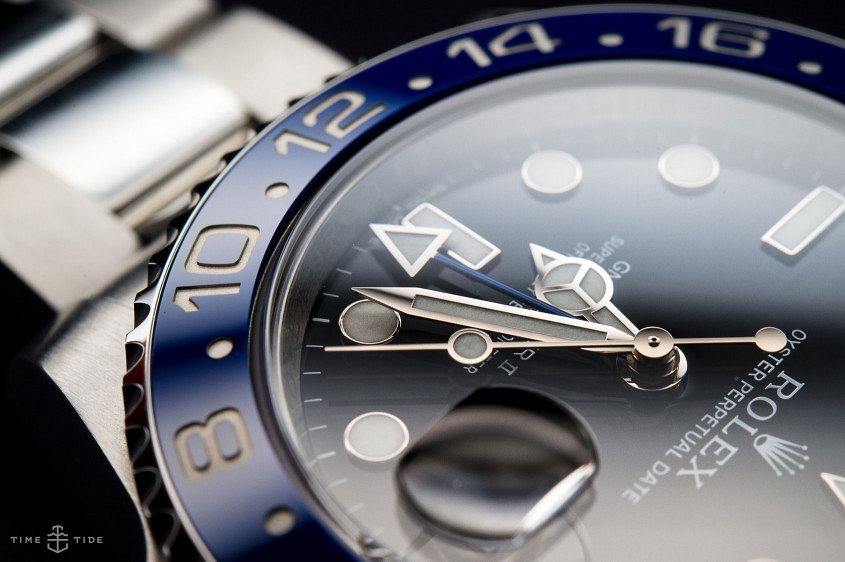 It’s been the case for centuries. Pioneers of industry pour plenty into R&D, stretching themselves thin to find that one small breakthrough that will separate them from the rest. It’s hard to imagine a modern TV without YouTube connectivity, a modern car without ABS, or a modern phone without the world at your fingertips, but once upon a time, features such as ceramic bezels were reserved for the upper echelon of luxury goods. Now, you’ve got yourself a nice new Seiko 5 Sports, and you feel like snazzing it up a bit with a ceramic bezel. Hop on eBay, browse the colours, and you can pick one up for less than $10 Aussie. How exactly did it come to this? Well, it’s been a journey. Broadly speaking, ceramic isn’t exactly cutting-edge technology, having been used by humanity at large for the last 26,000 years or so — but in the 21st century its usage has come a long, long way from the earthenware pottery of the stone age. Its immense hardness makes it an ideal material for knives, brake discs on race cars, and extremely durable ball bearings. Jaeger-LeCoultre took advantage of this by putting ceramic bearings in an automatic…
The post The democratisation of ceramic bezels is complete, you can now buy one for $10 appeared first on Time and Tide Watches.

 Bulgari has, for more than a century, been regarded as one of the finest luxury jewellery makers on this blue marble we call earth. Their expertise, attention to detail, passion and visionary design has resulted in some of the most stunning pieces of jewellery and objet d’art imaginable. As such, throughout the 20th century, the Italian firm’s creations were sought after and worn by royals, dignitaries, celebrities … basically, if you had wealth, power, notoriety or fame, you wore Bulgari jewellery. Then, at the turn of last century, Bulgari decided to try its hand at another discipline contiguous to that of luxury jewellery making – haute horology. They famously purchased Gérald Genta watches in 2000, and then went about honing their craft. And, within the first decade-and-a-half, we started to bear witness to the outfit’s high-end, in-house timekeeping creations. Watches like the revelatory Octo Finissimo Tourbillon and its manufacture Calibre BVL 268 (which broke the world record for the slimmest tourbillon movement ever created at just 1.95mm thick) were unveiled, and watch enthusiasts around the world started to pay attention. Since then, Bulgari has gone from strength to strength at the very top-end of watchmaking, and it has been truly exciting…


 Often, it is incremental and deliberate design progress — slow to the point that the casual observer might not even notice it — that creates the best products. Tiny changes, layered on one another year after year, are the key to creating an unmistakable visual identity that stands the test of time. It’s a blueprint that is as simple as it is challenging to achieve. For the custodians of a brand to maintain a steadfast faithfulness to a design that might have been born a generation or two before, requires belief as much as it does an understanding that good design will often outlive us all. While good designs will likely have long lives, they all have a foundational period in their youth, and that is where the Bulgari Octo Finissimo is today. The heavily faceted octagonal case of the Finissimo was first seen in 2014 with the release of the world’s thinnest tourbillon. At the time it was a curious watch to make for a brand that was best known as a jewellery firm, but it was the first sign of Bulgari’s unrelenting watchmaking intent. Bulgari followed the thinnest tourbillon record with another Octo Finissimo record in 2016 — the…