INTRODUCING: The new Cartier Santos-Dumont XL gets a mechanical upgrade and adds just 0.2mm in thickness
 At SIHH in 2019, Cartier released something very special, and oddly, it was powered by stock standard quartz. The Cartier Santos-Dumont was met with a standing ovation, not just because it was remarkably faithful to some of the earliest watch designs from Cartier, but it was also slim and relatively affordable thanks to that humble quartz movement. The real boldness of the piece was in its diminutive size and thinness. It was something of a redefined version of masculine style. And it was a bullseye. Perhaps the only thing it lacked, for the watch journalists who care deeply about such things at least, was some more moving parts. Cartier has answered those prayers with the release of the Cartier Santos-Dumont XL with a manual winding movement. The new movement will be available in steel, two-tone and rose gold. Looking past the movement just briefly, let’s talk about that XL new case. It’s not as significant as you might think. The case measures a still very wearable 46.6mm by 33.9mm and is genuinely slimline at only 7.5mm thick. This is only 0.2mm thicker than the quartz references from 2019, which is an impressive concession considering how the slimness of the 2019 reference caused…
The post INTRODUCING: The new Cartier Santos-Dumont XL gets a mechanical upgrade and adds just 0.2mm in thickness appeared first on Time and Tide Watches.
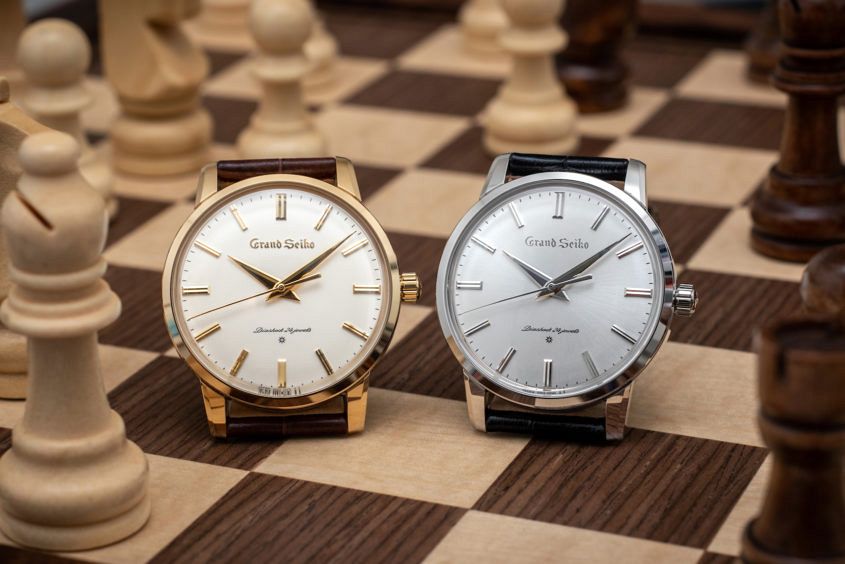 For anyone reading this in April 2020, you’ll agree that it’s a strange time to be alive. Somehow, we have already seen three months of 2020, a point that has felt both incredibly fast and agonisingly slow to pass. As the interconnected health and economic crises continue to unfold around the world, the news cycle is dominated by Coronavirus as its impact is felt everywhere. Including the watch industry, with perhaps the peak announcement this last week that yet more pivotal brands would desert Baselworld after a farcical fallout from the first COVID-related cancellation. While some brands have halted production, and even halted the release of new watches in 2020, we have still seen evidence of the show going on, especially over the last few business days, when we actually had some releases. This new crop has certainly been thin, but it’s not without its genuinely exciting highlights. I wanted to wrap up my five favourites from the handful of watches that have been released so far, in what will hopefully be the beginning of an interesting (if quiet) year of watch releases. Grand Seiko SBGW258 in yellow gold (or SBGW257 in platinum) I know this isn’t one watch, but,…
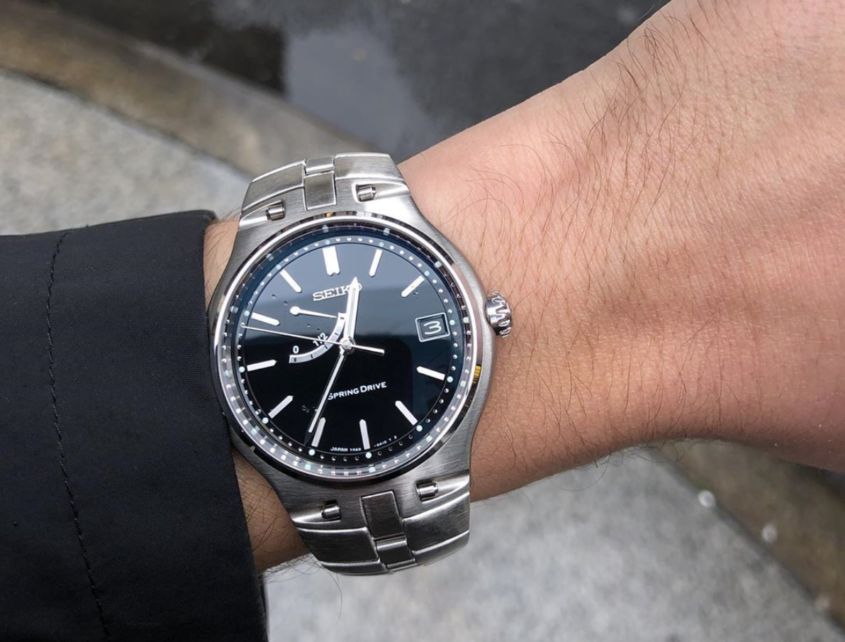 The turn of the century gave us Y2K hysteria, the first use of the Euro as currency and the Spring Drive movement. That’s right, in 1999 we saw one of the most remarkable innovations in watchmaking of the last half-century, with the release of the first-ever Spring Drive powered watch, the Seiko SBWA001. This is the story of a reader by the name of Zach’s pursuit of one of these fairly rare watches that marked a new beginning for the Japanese manufacturer. In June last year I was fortunate enough to attend the spectacular HSNY (Horological Society of New York) lectures in honour of the 20th anniversary of the proprietary Spring Drive movement. As an owner of an SBGA211 “Snowflake” and big fan of the Grand Seiko brand, I was excited at the prospect of really digging into the history of the engine of one of my favourite timepieces. For a complete overview of Spring Drive if you are not familiar already, it is best to hear from the experts themselves and I feel obligated to direct you to the lecture itself by Joseph Kirk, Brand Curator and National Trainer for Grand Seiko Corporation of America. I caution any sceptics…

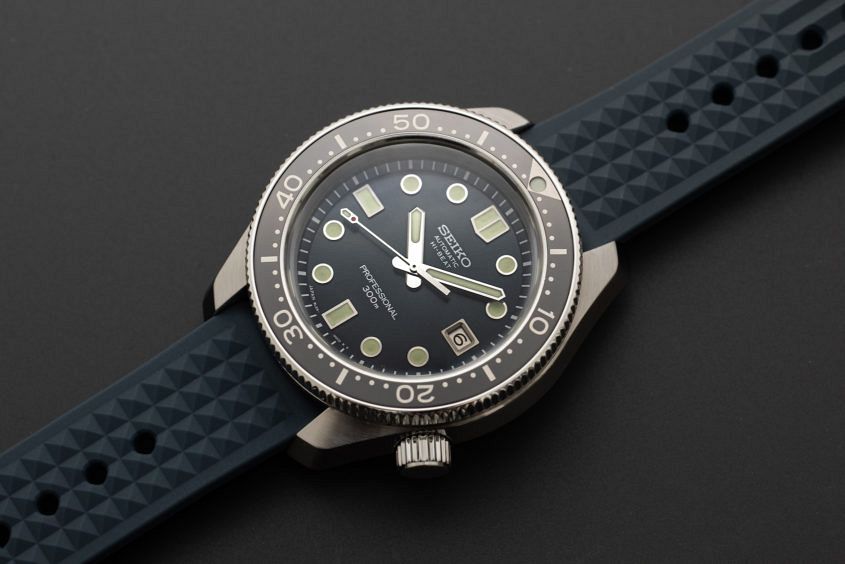 This year, Seiko is celebrating 55 years since their first-ever dive watch, which was released in 1965. Since then, the dive watch has become a core part of Seiko’s offering, with innumerable watches released over the years, many of which have developed cult followings. To mark this occasion, Seiko have released a trio of limited edition watches, each paying tribute to an important dive watch from their archive. The three watches in question are based on references released in 1965, 1968 and 1975 respectively, and all still make up a significant part of their professional collection today. As I mentioned, they are limited in their production numbers. Each watch will be available in 1100 pieces, and will be delivered between June and July of this year. Seiko 55th Anniversary Dive Watch Collection Australian Pricing The Seiko SLA037J1 reissue from 1965 is AUD$9750, The Seiko SLA039J1 reissue from 1968 is AUD$10,500 The Seiko SLA041J1 reissue from 1975 is AUD$6950. Made in partnership with Seiko. However, the opinions expressed in this article are our own in accordance with our Editorial Policy.
 Watch collecting is fun. At least it should be, which means that from time to time, you have to get back to basics and enjoy the roots of the hobby. Even though a lot of us turn a blind eye to it, one of the staples of the watch industry is inexpensive quartz-powered timepieces. For years, Timex has been the go-to brand for people worldwide looking for the time on their wrist at a great price. And I would argue that Timex has in fact cultivated its brand cachet as well as some of the luxury heavy hitters. During these stay-at-home self-isolation days, watch enthusiasts are finding more time to immerse themselves in Instagram and other social media featuring plenty of high-end, high-complication eye candy. This is all well and good, however I propose that an occasional palate cleanser is needed and that the Timex Q Reissue fills that role perfectly. When a brand has accumulated history and a deep archive, inevitably it can start to draw new customers by reprising the past, especially while appetites for styles of yore are not exactly on the wane. Timex has done just that with last year’s Q Reissue. The origin story of…
