HANDS-ON: Louis Vuitton Tambour All Black Chronograph 46
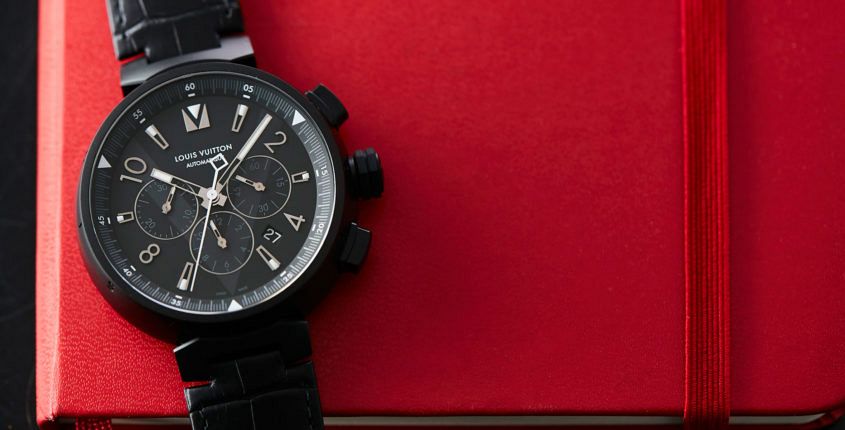 One of the malaises sweeping the Swiss watch industry is, in my oh-so-humble opinion, that of homogeneity. From a distance, the world from the wrist down looks remarkably similar: round, black-dialled steel sports cases in a style that sits somewhere on a spectrum between vaguely retro to full-blown reissue. I’m well aware that this isn’t a new phenomenon, but today a properly original watch design is an exception, rather than the rule. Louis Vuitton’s Tambour case is original. I mean, sure, it’s round and sporty, but it is also possessed of a really interesting case, with an inwardly curving profile that looks like it was actually designed by a person, rather than a committee. And it’s not just the case — the whole kit and caboodle is dramatically different from what you’d expect from a Swiss watch, which is unsurprising because the visual identity and IP of Louis Vuitton is so strong, and so pervasive. There are versions of the Tambour in the house’s famous motifs, but this option is a little more — for lack of a better word — stealthy. For all that the palette is monotone, this is not a shy watch. There’s that aforementioned sweeping profile,…
The post HANDS-ON: Louis Vuitton Tambour All Black Chronograph 46 appeared first on Time and Tide Watches.
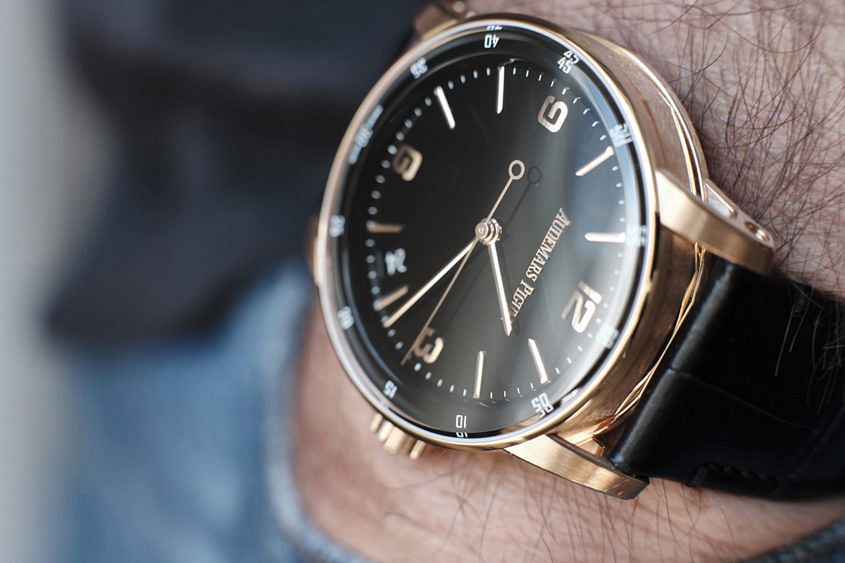 It’s fair to say at this point of 2019 that the CODE 11.59 collection from Audemars Piguet has been the most widely panned watch release of the year, if not recent years. It was in some ways a perfect storm of critical disapproval, poor PR and a pack mentality that got pretty nasty. But pictures on Instagram tell only a tiny fraction of the story, and they’re certainly not a great way to judge a watch. Which is why, when we saw this collector review over on Deployant, we were intrigued. Christian Kretschmar picked up a black-dialled time-only piece after falling in love with it in real life. I’m lucky to have a few very beautiful watches in my collection, of which some were made by Audemars Piguet. I find it hard to compete with the complexity and variety of finishes on the APs, so I mostly pick one of those to wear. Since the CODE is part of my collection, I always look for reasons to wear it. Being a rose gold dress watch, it might seem to be over the top for some occasions, but I find it quite versatile, even in a more casual setting. Regardless of…
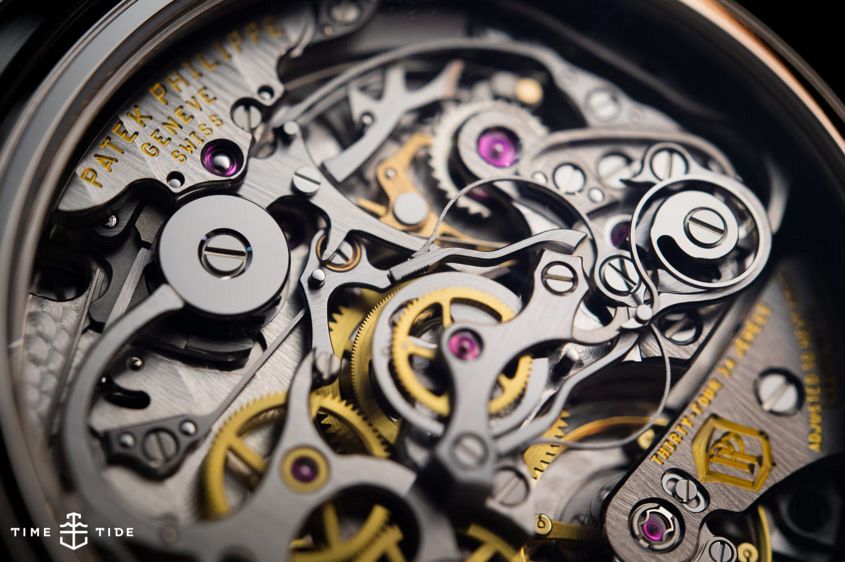 Editor’s note: Sandra wrote this lovely piece at the start of the year, and it speaks to one of the biggest movements (if you’ll pardon the pun) in the watch industry over the last few decades – the rise of the in-house movement. I won’t steal Sandra’s thunder, but suffice to say it’s worth a read. If you’re considering buying a new watch, one of the least important questions you should ask is: “Does it have an in-house movement?” To be blunt: the mere existence of an in-house movement does not necessarily equate to a better watch. So why do we see the in-house claim being made by so many watch brands? Why do they use it like a badge of honour, a mark of prestige and exclusivity, a (strongly implied) guarantee of superior quality – and a reason for charging a higher price? Let’s start with what the term actually means. Like many words that have been hijacked by the luxury marketing community and rendered meaningless through misuse and overuse, “in-house” has been reduced to little more than jargon – and has bamboozled watch buyers in the process. In its true sense, an in-house movement’s components must all (screws,…


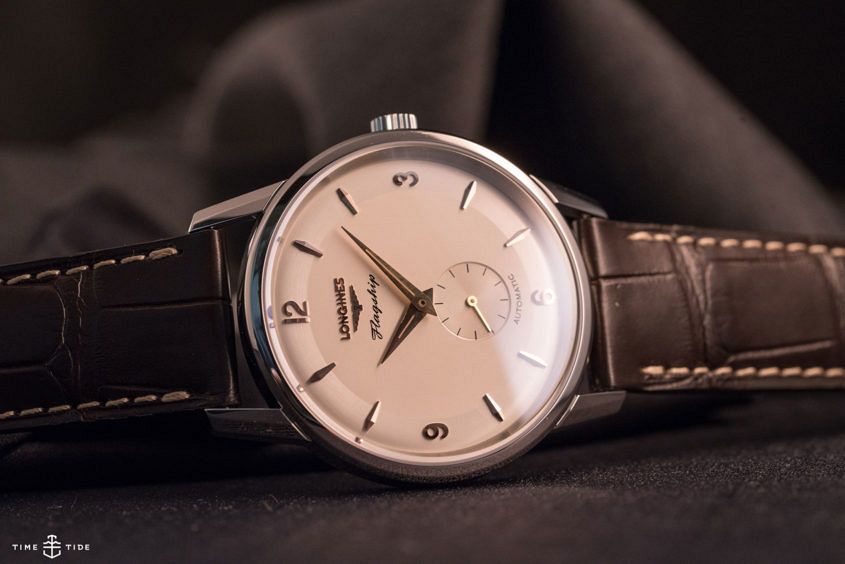 Editor’s note: The Longines Flagship Heritage 60th Anniversary is an oldie but a goodie. And not an oldie in the 1950-something sense, but rather in the, ‘this 2017 limited edition is probably all gone by now’. But it’s very much the definition of a modern heritage banger. The hardest thing when re-creating a vintage watch design is knowing when to stop. Some changes — swapping the plexiglass crystal for sapphire, and upgrading the movement — are logical, and others, like an increase in size to more modern dimensions, make sense. But the real art is knowing where to stop, and what to keep. By that measure, the Longines Flagship Heritage 60th Anniversary is a masterpiece in miniature — 38.5mm to be exact. This size is a perfect case in point: it’s an incremental increase that stays true to the spirit of the original in a way that a 40mm watch would not. Then there’s the dial, which would be hard to distinguish from a 1957 model, not least because there’s no unsightly date window to spoil the luminescent combination silver dial and gold tone markers. And while most people will be interested in the steel version, there are also rose and…