
Buying Guide – Our favourite Audemars Piguet Royal Oaks that you can buy today – waiting lists permitting…
The word iconic is one of the most overused and abused words in the watch industry, however, I bet everyone agrees that the Royal Oak actually IS a true design icon. One that defined the modern luxury sport watch. In 1972, Audemars Piguet and Gerald Genta created an archetype; match a sporty but clearly expensively-crafted steel watch with an integrated steel bracelet and an automatic, ultra-thin movement. Et voila, there’s the luxury sports watch, an archetype that has never seemed more relevant than today, as demand for such watches is higher, much higher, than availability.
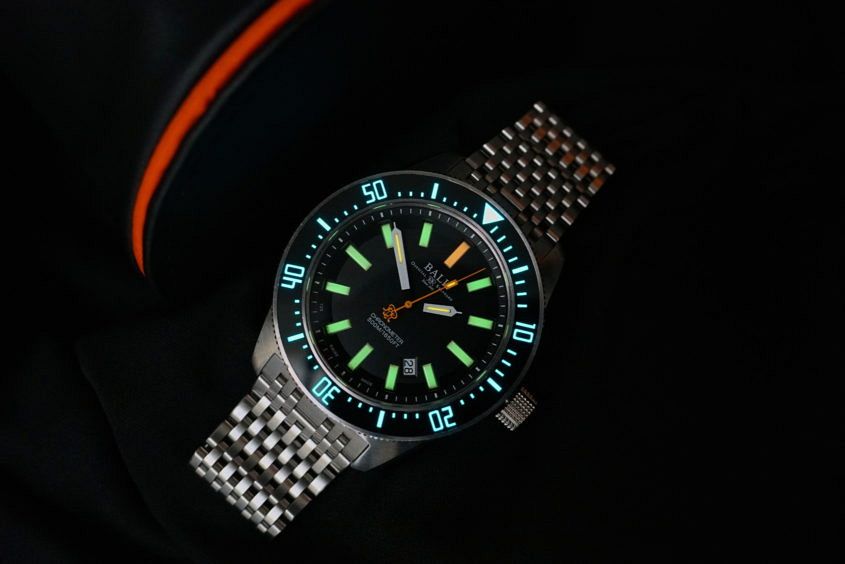 Editor’s note: These days, Ball is a bit of a niche brand, but even though they’re not front of mind, they’re in no danger of fading away, thanks to their exceptional lume. Cam has a look at one of their modern divers, the Ball Engineer Master II Skindiver II. Read on … The watch industry is a well-oiled novelty-making machine. Every year it produces a sea of new releases that quickly turns the tide of attention from the old towards the latest and greatest in the world of watchmaking. Occasionally, though, it’s nice to stop and look back on the watches that we might have missed. Watches like this one: the Ball Engineer Master II Skindiver II. With a brand history that dates back to the American railroad in 1891, and more than a couple of technically nifty details, I quickly jumped at the chance to try one out in the metal. Vital statistics Released in 2015, the design of the Skindiver II is inspired by a 1962 version of the Ball Skindiver, retaining the classic look of the Skindiver case, and upsizing it to 43mm wide and 14mm thick. With the larger case comes an improved water resistance of 500…
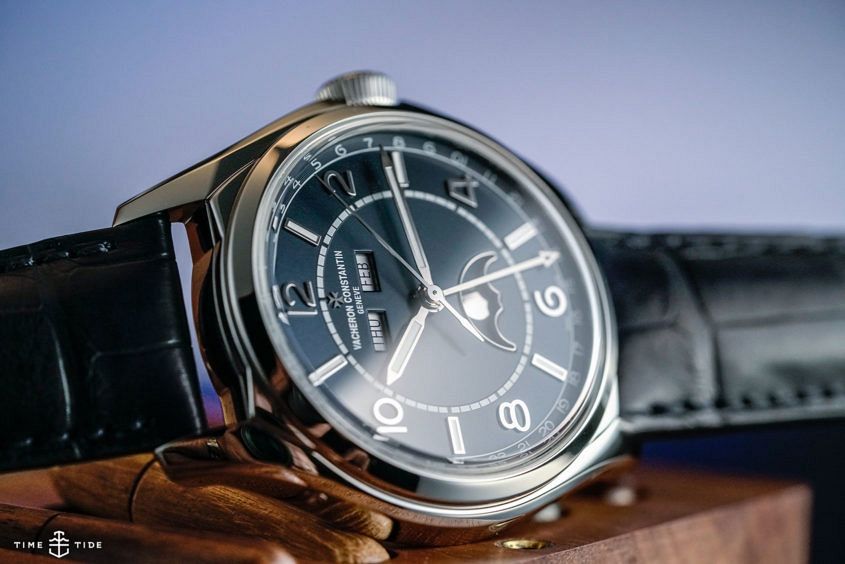 Vacheron Constantin’s Fiftysix collection — first released in 2018 — is a refreshingly upbeat take on mid-century design, full of personality and warmth. And this new Vacheron Constantin Fiftysix Complete Calendar in petrol blue keeps the tempo up. The case looks simple at first glance, but quickly gathers sophistication the more you study it. I particularly like the slight cushiony flaring around the crown, and the flare (or is that flair?) of the lugs, which are wide at the flanks but quite short, resulting in a timepiece that’s comfortable on the wrist. The proportions on the calendar model add to the comfort factor — the steel case is 40mm wide by 11.6mm tall. Of course, on this particular model the dial is the story. Not the layout, but rather the colour. Before we get to the impact of petrol blue, let’s talk about that layout. It’s really classic, in the best possible way. Day and month are nested under the brand at the top, and that wide moon display provides some vertical balance at six. The pointer date is very old-world, and the choice of delicate printed numerals — especially those open 6s and 9s — is charming. But there’s…
 Editor’s note: Earlier this week we had a look at a few TAG Heuer Tourbillons, including the impressive new Nanograph — with its fancy new carbon escapement and yellow highlights. But we’ve also still got the hots for one of the original models, this all-black beauty clad in ultra-tough ceramic. Dark, meet handsome. Owning a tourbillon is a dream for many watch-loving folks. The little, eternally whirling cages, designed to counteract the effects of gravity on a timepiece’s isochronism, aren’t particularly practical, though they hold within them a charm that in many ways sums up the appeal of mechanical watches. But for many, the dream of strapping the pinnacle of watchmaking’s craft onto your wrist would always be just that — as, traditionally, tourbillons have come with a very high price tag. And while no one is suggesting that $20,000 is pocket change, when TAG Heuer introduced a Swiss, automatic tourbillon at this very aggressive price point, the industry as a whole took notice. It’s worth pointing out that TAG Heuer was able to achieve this by using more industrial processes in creating the tourbillon, as well as making them at a greater volume than other brands. But still, the…

 Watch companies are pretty happy to jump on board as sponsors of all number of sporting teams, including Formula 1, boxing or tennis, for the obvious reasons that they have massive viewerships and highly engaged fans. One sport that definitely isn’t structured as a spectator-friendly sport is triathlon, begging the question as to why the Breitling Triathlon Squad exists. In the couple of years since current CEO Georges Kern took the helm of the company, Breitling has been gathering “squads” of notable people in trios of ambassadors. You might have heard of #squadonamission if you’ve ever visited the Breitling website, relating to their respective Jet, Surfer, Explorer, and Cinema squads, but there is no mention of a triathlon squad, at least on the site. That isn’t to say the Breitling Triathlon Squad doesn’t exist, or that Breitling doesn’t have a partnership with Ironman, the company that organises triathlon events around the world – after all, they just released a limited edition Superocean 44mm. The idea behind these squads is to keep the aviation heritage of Breitling at the front of mind through building highly visible teams connected through a united mission objective, just as a squad would in an airforce. While…
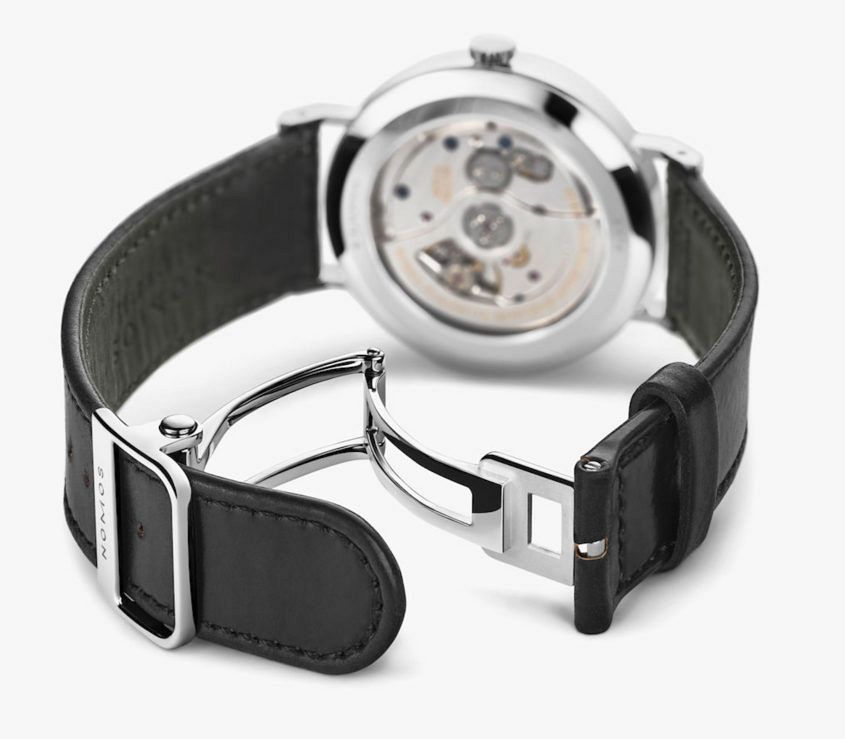 In the latest instalment of our glossary series (you can see all our educational style content here), we tackle one of the most overlooked (and most important) elements of a watch. The bit that attached it to your wrist – buckles and clasps in all their forms … The tang buckle, also known as the pin or ardillon buckle The most common type of buckle in the watch industry. The Tang/Pin/Ardillon buckle looks very much like a traditional belt buckle. The tail end of the strap is threaded through the loop of the buckle, and held in place by the pin (or tang) poking through a hole and resting in a recess in the loop. The advantage of these buckles is that they are cheap to produce. The disadvantage for the customer is the constant flexing and fastening of the strap means the strap wears out a lot faster. The deployant clasp Often called a deployment clasp, the deployant was invented by Louis Cartier (the grandson of the founder) in 1910. The name comes from the French word déployant, which means to unfold, extend, or unfurl. The deployant extends the life of straps because once it is fitted to…
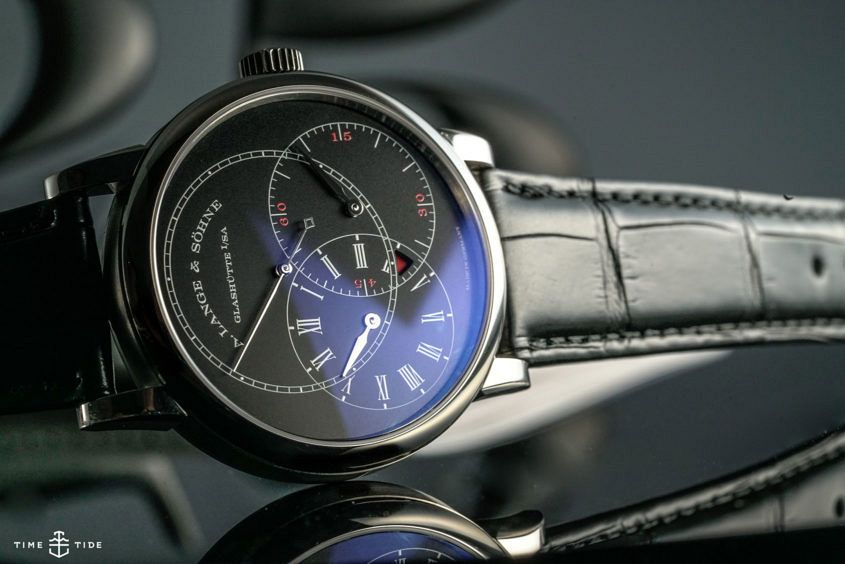 A. Lange & Söhne’s Richard Lange Jumping Seconds is a real insider watch. From the dial it looks much like many other Lange watches, but really, it’s something quite special. It’s a watch that’s been around since 2016, but this year we were treated to a chic new version, in white gold with a black dial. So, what makes the Richard Lange Jumping Seconds stand out (albeit in the most understated way possible)? Well, in a nutshell, it’s a watch that is all about absolute precision, and the team in Glashütte have let nothing get in their way. The caliber L094.1 is a jumping seconds movement, where the somewhat disconcerting quartz-like tick is designed for absolute precision in time telling. On top of that, the movement is packing a constant force escapement (a remontoire in this case), ensuring no loss of precision in the last few hours of power reserve (something that’s indicated by that red triangle that appears at the intersection of the dials). There’s also a hacking zero-reset mechanism, meaning that whenever you pull the crown out, the seconds hand snaps to the 12 o’clock position, allowing you to accurately reset the time, every time. Precision is indicated…
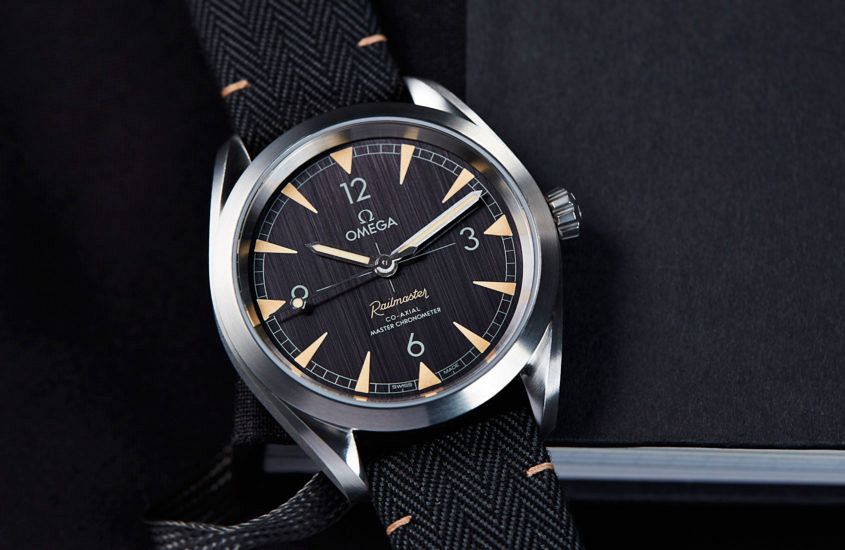 Editor’s note: A little while ago, someone on a FB watch group I’m part of asked what watch they should buy (out of three versatile, black-dialled tool watches), with one option being the Omega Railmaster. I didn’t have to think about my answer. It was the Railmaster. Hands down. Read on for my reasons why … Odd as it may seem today, but many of the enduring designs of mid-20th century watchmaking sprang from a very specific purpose: scientific exploration and the quest for accuracy. The Omega Railmaster, one of their original professional models, stands alongside other great names like the Milgauss, the Ingenieur and the Geophysic. And last year the Railmaster received a major upgrade. Not just in the near 1:1 limited edition re-creation but in this new interpretation: the Seamaster Railmaster. The case Not too little, not too large: 40mm is pretty much perfect for this style of watch, but that’s not all that stands out. The case is pretty much identical in form to the Aqua Terra, except for the finishing. While the AT is all about polished lines and reflected light, the Railmaster is muted and matt, thanks to its satin-brushed finish, something that totally fits…