5 of the best GMTs for under $5000
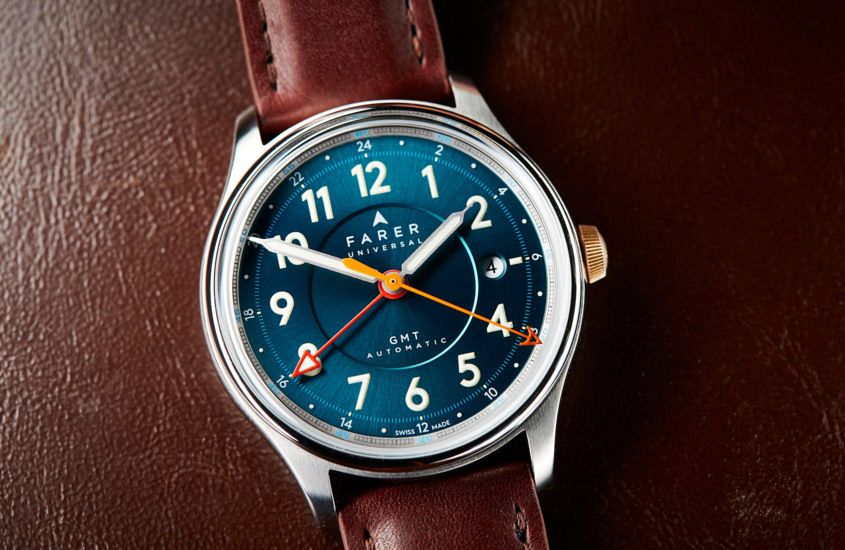 Editor’s note: Travel is the unofficial national sport of Australians, which makes sense given our geographic remoteness. So we thought we’d do our bit by having another look at this list of best in budget GMTs, all in the very achievable $5000 or less price point. One of the most useful everyday complications is the GMT or dual time zone. If you travel a lot or do business internationally it’s certainly a lot easier to check your GMT than to fiddle with your phone, trying to find the world clock app. Given the usefulness of this complication to the jet set, it’s also a genre dominated by pilot’s style watches, and for whatever reason, it’s a little under represented in the entry-to-mid-tier price points. Well, all you thrifty frequent flyers can rest easy, as we’ve scouted out five of the finest affordable GMTs on the market, all priced at well under 5K. We also managed to do it without including a single ‘homage’ to the mighty GMT-Master. Farer Lander, Oxley and Ponting First cab off the rank is the brand new trio of automatic GMTs from UK-based Farer. Farer first came to our attention because of their bright and playful…
The post 5 of the best GMTs for under $5000 appeared first on Time and Tide Watches.


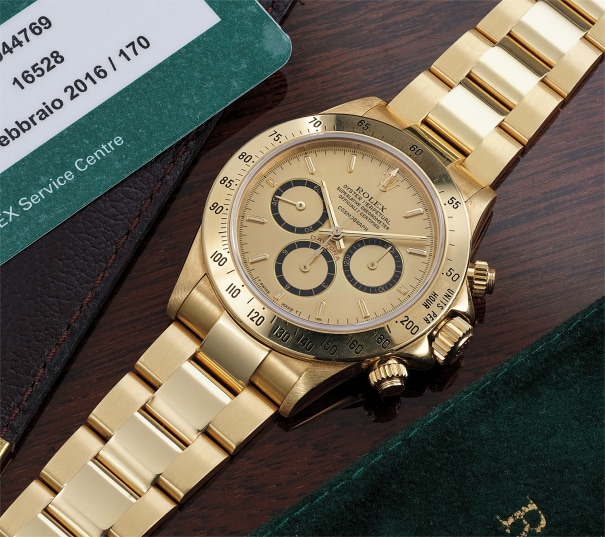 Geneva watch auction season is rolling around again, and one of the stars of the show is this watch, a 1989 Rolex Daytona in gold. It’s being auctioned by Phillips, at their Geneva Watch Auction: Nine, on May 11 and 12. From the dial side, it seems to be a stock standard reference 16528; in good condition, sure, but nothing super special. Turn it over and it all begins to make sense. “A Angelo da Ayrton 1978 [From Angelo to Ayrton]” This watch was a gift from Ayrton Senna, one of Formula 1’s most gifted racers, a man who died tragically on the track in 1994. It was given to Angelo Parrilla, the man credited with ‘discovering’ Ayrton in the karting scene and mentoring him in his early career. And, unlike many relationships in the turbulent world of racing, the friendship between Senna and Parrilla remained strong. Senna gifted this watch around 1990, when he was at the top of his game (he won world championships in 1988, 1990 and 1991), and it’s a first-generation automatic Daytona in gold, using an El Primero base movement. In addition to all the paperwork you would expect of a watch at this level,…
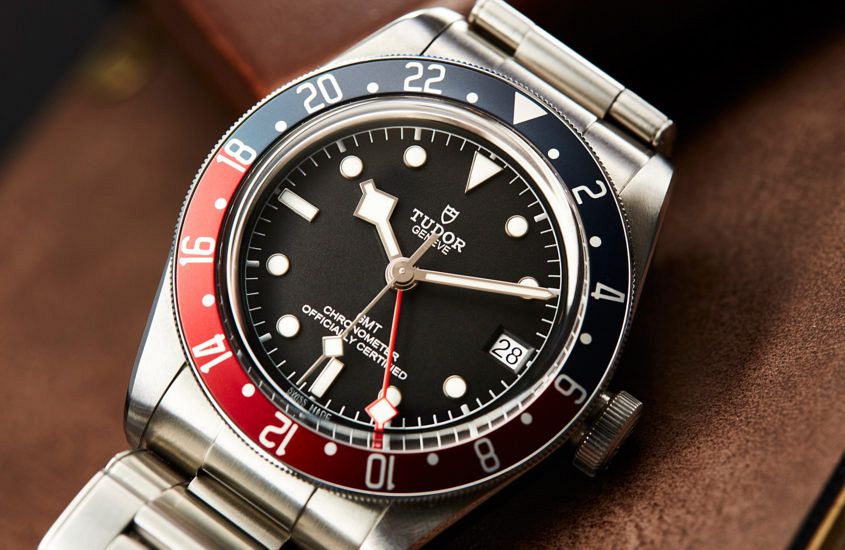 Editor’s note: The other week I met up with a globetrotting friend from the internet (it happens more often than you might suspect), and on his wrist was the Tudor Black Bay GMT. It looked great, and more than that, old mate actually wore it travelling (as opposed to his vintage Rolex GMT), because it could: (a) handle the rigours of the road, and (b) he wasn’t constantly paranoid about scratching it. And really, isn’t the best travel watch the one you actually travel with? Since their dramatic reboot in 2012, Tudor has continually upped the game. From the original Black Bay, to the development of in-house movements, new case materials, and complications like the chronograph, every year brings a new surprise. Based on this track record, I’m always excited to see what Tudor will do next with the Black Bay, not least because of the element of brinkmanship at play. Well, this year Tudor outdid themselves once again with the Heritage Black Bay GMT. It’s a hot watch. Not just because of its obvious good looks — I mean, just look at that bezel — it’s also an extremely high-quality offering, which can be said for all Tudor’s pieces,…
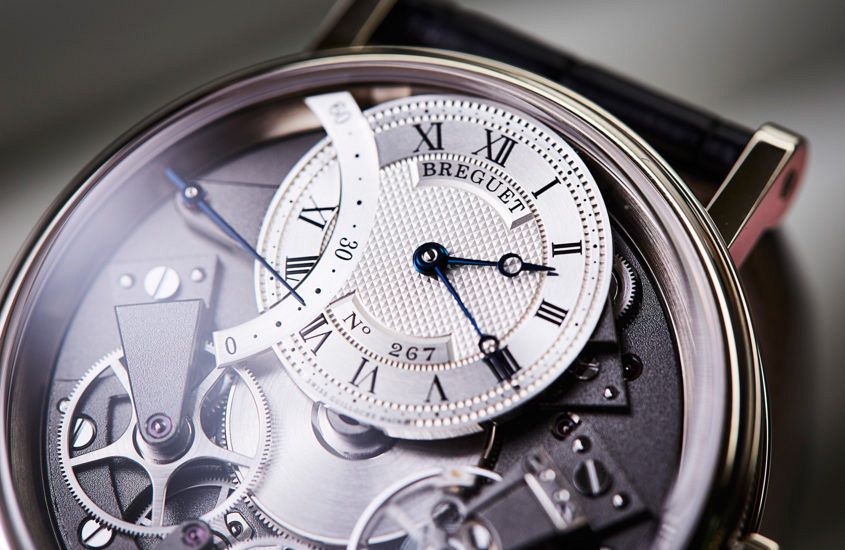 Editor’s note: One of the hoary old sayings of watch collecting is, “Buy the best example you can afford.” And, for all its worn, chestnut-y appeal, the statement still rings true. Sure, saving a bit of cash for what is essentially the same thing might seem tempting, but in the long run, quality wins out. Here’s Justin’s excellent piece from last year on what you get for your money at various price points … It’s a question many of us in the industry get on a regular basis: ‘What makes one watch worth $1000 and another worth more than $100,000?’ To be fair, it’s a legitimate question from those less well versed in the world of watchmaking. At a surface level, and to the untrained eye, a traditional two or three-hand watch delivers the same indication of time, and the same aesthetic proportions regardless of price point, and a simple change from steel to white gold (for example) isn’t nearly enough to justify a jump of more than roughly $20K. The old adage of ‘the devil is in the detail’ couldn’t be more appropriate. Aside from choice of materials — as can be seen with things like the NTPT carbon…
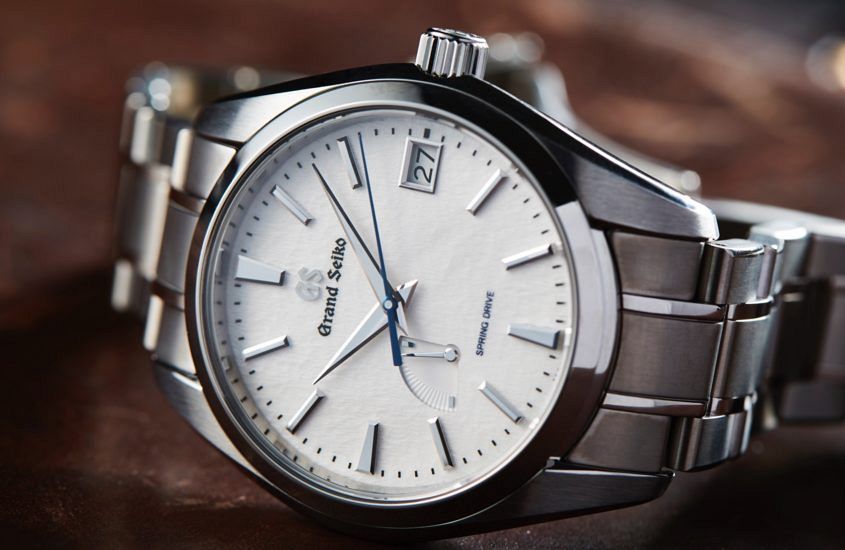 Editor’s note: It’s one of the most well-loved Japanese watches out there, and a legend in its own right. Only question — what’s cooler, the movement or the dial? You decide. Read on for our review of the Grand Seiko SBGA211 Snowflake. Grand Seiko’s famous ‘Snowflake’ has been with us for quite some time now (it was first released, as the SBGA011, in 2010), and it’s quickly earned a reputation as an exemplary everyday watch that manages to combine functionality and beauty in equal measure. Smartly, Seiko knew enough to leave one of the cores of the Grand Seiko collection well alone … until this year. The ‘new’ Snowflake is the SBGA211, and, thankfully, it’s virtually identical to the original — except for the dial. At the start of this year it was announced that Grand Seiko would be fully independent from Seiko — a move well overdue. The most obvious symbol of this change was that the characteristic (and idiosyncratic) Seiko/Grand Seiko double branding disappeared from Grand Seiko dials, resulting in cleaner, less confusing dials. In the case of the Snowflake, this simpler design is a big improvement, giving a more balanced look that allows the wonderful texture of…