
Independent Watchmaking – In Conversation with “Monsieur” Philippe Dufour
Philippe Dufour is a living legend. The independent watchmaker is one of most (if not the most) revered craftsmen in the industry and his watches are regarded as the ultimate in traditional hand-finishing. We visited the 70-year-old master in the small village of Le Solliat, in the Vallée de Joux. There, Philippe Dufour crafts his watches entirely by hand, elevating the art of watchmaking to the highest level. Visiting his workshop is a unique experience. It is exactly what you have dreamed about, and yet everything is a surprise and catches your attention: old tools, ancient machines, drawers, books, raw materials… This place has soul.
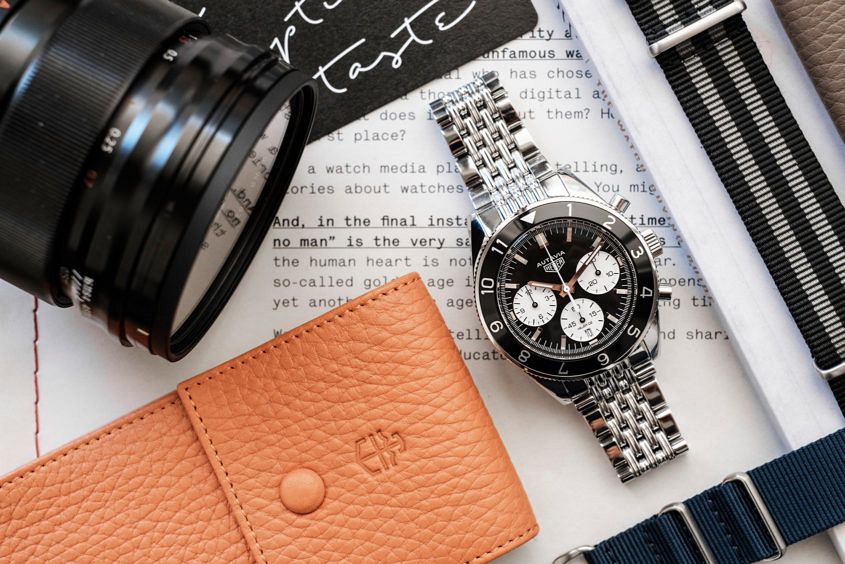 If, like me, indecisiveness is your middle name, choosing your next watch can be hard. That may seem like nothing more than a #firstworldproblem to the uninitiated, but to me, I prefer to think of it as a rewarding methodical process, a “journey to better beginnings” if you will. Let’s face it, though, sometimes it’s just too damn hard. It’s a journey that friend of Time+Tide, Anthony Do, knows all too well. An avid photographer and self-confessed watchnerd, the struggle is real for Anthony as he goes to and fro over the pros and cons of which of TAG Heuer’s astounding Autavia re-releases is for him. Well, we’re here for you, Anthony – even if it’s just to tempt you and make it that little bit harder for you to decide. I’ve compiled a list of every reimagination of the awesome Heuer-02 Autavia I could find. First up, where did it all begin? My watch journey started with a TAG Heuer Carrera Chrono, gifted to me by my now wife for our engagement about a decade ago. Since then, many watches have come and left my collection. In fact, my friends think of me as a ‘serial watch flipper’, but I like…
 In a battle that’s been brewing since the dawn of Time (and Tide, in 2014), Andrew and Felix finally pick up the tools and take on the challenge of taking apart and then rebuilding a manually wound movement. We lay our scene at the Omega Service Centre in Melbourne, and the occasion is somewhat of a celebration around the announcement that Omega has upgraded its Manufacturer’s Warranty on all watches to a whopping five years — three years longer than the industry’s standard warranty of two years, which is demanded by European law. Unlike most other manufacturers that offer five years warranty on certain models, Omega is offering it on all of them. To prove the importance of servicing, we thought it was an opportune time to reveal the delicate innards of your watch and the expertise you are employing when you have a trained watchmaker see to its servicing. To make it interesting, we thought it would be fun to play watchmakers for a day, while engaging in a deadly serious (lol) rebuild battle across three criteria: speed, efficiency and accuracy. We asked you in a poll who you thought would win. The results were in favour of Felix to the…


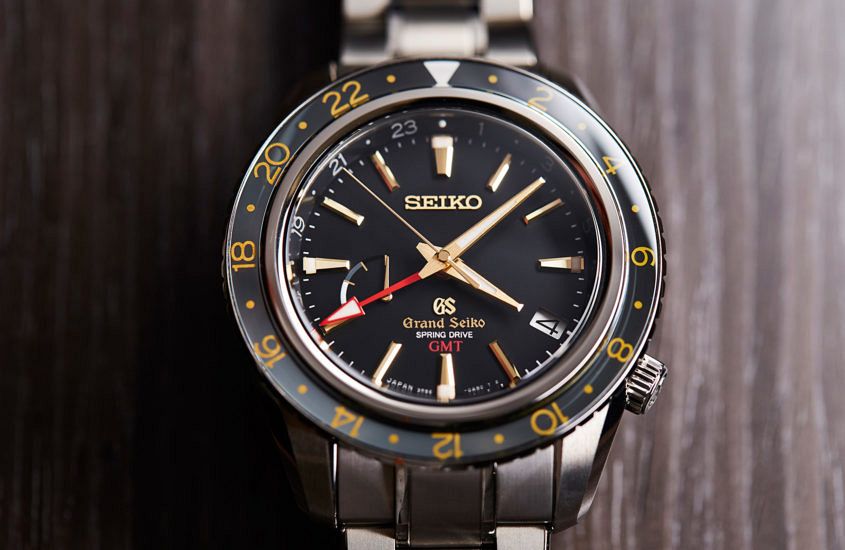 It’s fair to say that much of Grand Seiko’s catalogue leans towards the dressier end of the spectrum — but, of course, there are exceptions, and the SBGE215G is a perfect example. This sporty GMT is an evolution of the SBGE201G; it shares the same large 44mm case. But while the SBGE201G had a steel case, the 215G is cased in high-intensity titanium, and I can tell you that on a watch of this brawn, the lighter weight of titanium makes a real difference on the wrist. There’s also been a change to some of the dial details: the hands and applied indices are now in rich red gold, as is the 24-hour scale under the sapphire bezel. These golden details make a real change to the overall mood of the watch — it’s less purely utilitarian and a touch warmer and, dare I say it, flashier. Whether or not that’s a good thing is entirely up to the wearer — subjectivity is great that way. What’s less up for debate is the quality of the overall offering. Grand Seiko’s excellent build quality is very much in evidence here, and, even though you can’t see the 9R66 movement (the solid…
