IN-DEPTH: Get funky with the Oris Chronoris Date
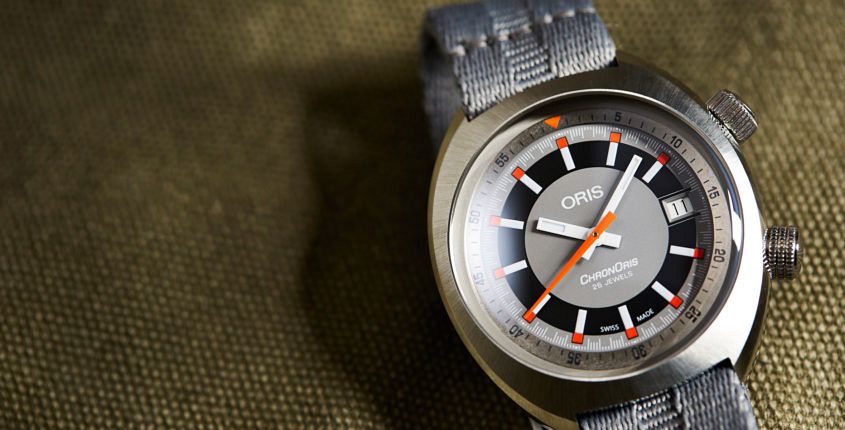 The story in a second: Disco might be dead, but the ’70s live on in Oris’ latest re-edition. A decade for experimentation, the ’70s was an era of bold shapes and brightly coloured designs (men’s turtleneck ponchos, anyone?). While many of these experiments should never be repeated (men’s turtleneck ponchos), there are a few special exceptions. One of which is the Oris Chronoris. Released in 1970, it was the brand’s first foray into the world of motorsport and their very first chronograph. Since then, Oris has built a strong stable of auto-themed watches. Maintaining connections to the sport of motor-racing with partnerships including Audi Sport and Williams’ F1 teams. Oris first paid tribute to the Chronoris in 2005, in the shape of a retro-themed chronograph, and once again have honoured the one that started it all, with the release of the Oris Chronoris Date. The case The case of the Chronoris Date takes most of its design cues from its retro predecessor. Barrel-shaped with cut-out 19mm lugs, its rounded curves are fully polished, except for on top where a radially brushed finish creates a dazzling sunburst effect. This effect also draws the eyes towards the wonderfully double-domed AR-coated sapphire crystal, which not only…
The post IN-DEPTH: Get funky with the Oris Chronoris Date appeared first on Time and Tide Watches.


 There’s a reason chronographs are one of the most perennially popular watch complications – they add a lot to a watch. Functionality, interesting design elements, and a sense of derring-do, thanks to the chronograph’s close association with the exciting and glamorous worlds of motorsports, aviation and general athletic endeavour. Most importantly though, they add a real sense of tactility, allowing you to interact with – and measure – the passing of time in a meaningful way. And I’ve got to say, I could get used to wearing and using this Raymond Weil Freelancer. The dial and case is a quiet explosion of colour and texture, with a pleasant mix of finishes that not only amp up the dressier aspects of the watch but also ensure that the simple act of checking the time is a mesmerising lightshow. Raymond Weil’s Freelancer Chronograph Automatic Australian pricing Raymond Weil’s Freelancer Chronograph, on leather $3895
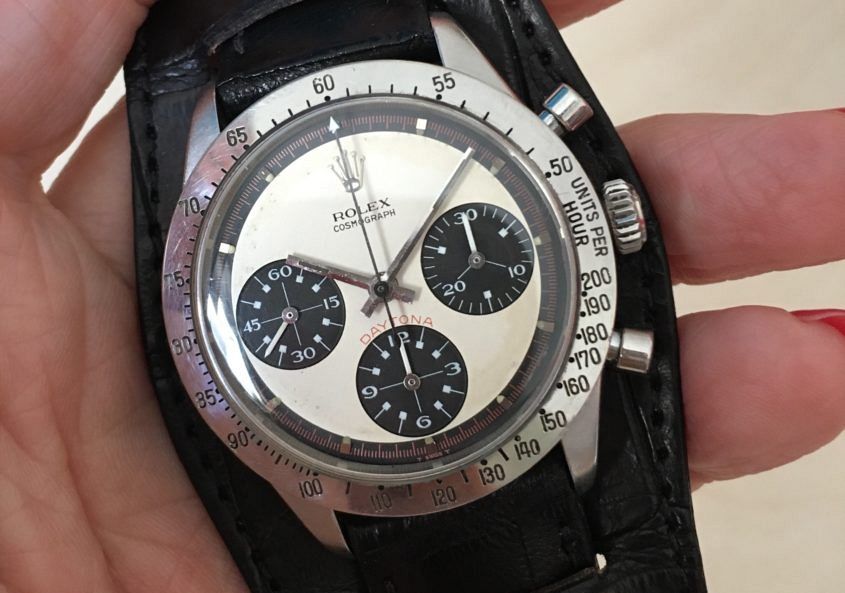 When I had the opportunity, in Geneva this past summer, to get my hands on the 20th century’s most famous wristwatch and talk about it with the man who will be holding the hammer when the watch is auctioned by Phillips in New York in a few days, my immediate thought was I-love-my-job-I’m-so-lucky. Followed by a few key questions: Would the watch feel more special on the wrist than your typical Cosmo Daytona? Does Aurel Bacs, auctioneer supreme, regard this as anything more than another (likely) record-breaking piece? And, on that note, just why was the pre-sale estimate — “In excess of $1 million” — so low? The importance of provenance When I found out that this watch was entering the market I was intellectually excited but emotionally detached. It’s a watch, right? With a very good story. A watch that loads of collectors would willingly sell their furniture (if not their mother-in-laws) for. But it’s a Rolex Cosmograph Daytona with an exotic dial, Ref 6239, circa 1969. It’s only a watch. That’s how it looked and felt for about the first three seconds after Alex Ghotbi from Phillips handed it to me. Then something took over – the knowledge…
