
Sunday Rewind: Bulova’s Secret History With The CIA
You may not have heard this story – and there’s a good reason why.
You may not have heard this story – and there’s a good reason why.
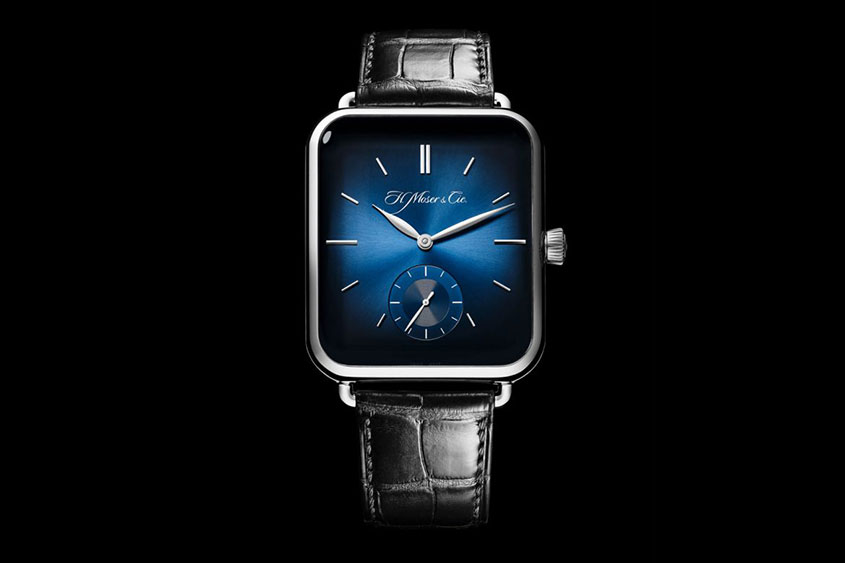 Editor’s note: Many executives in the Swiss watch industry are boring. They went to finance school, and they sell watches by looking at a balance sheet, never finding any of the watches in their own catalogue inspiring, and therefore never inspiring anyone to buy one. This could not be further from the truth for Edouard Meylan, the CEO of H. Moser & Cie. In this interview he gives a crash course on start-up marketing in the watch world (where interesting strategies have come to life recently), and discusses why he was once waiting for legal letters from Apple. It’s both reassuring and alarming to discover that H. Moser & Cie. CEO Edouard Meylan is a human version of his brand’s watches: he is stylish, sophisticated, smart (more on that later) and in possession of a sense of humour that is never too far from the surface. He’s also refreshingly direct and far from complacent about the favourable position he currently finds himself in. All of which adds up to a boss who’s well placed to bring the old, established name of Moser back into the spotlight. I sat down with Edouard in Sydney yesterday, and received a crash course in brand-building 101 from the…
The post Why Edouard Meylan sells watches smarter appeared first on Time and Tide Watches.
 With a name that sounds like it comes straight from the Marvel Cinematic Universe, it should come as no surprise that the watch looks more than a little out of this world. First of all there’s the dial — or rather the lack of it. Because as you might guess with a name like “Skeleton X”, the dial of this watch is pretty extensively open-worked, offering the wearer a beautifully worked gear train, as well as a whole lot of negative space. The bridges — slight as they may be — form the ‘X’, around a box-like aperture, with the bottom and top aspects of the X framing the escapement and power barrel respectively. This is a thoroughly modern take on a classically skeletonised watch. And while the architecture is aggressive enough, it’s got nothing on the case, which is made from a material called Carbonium. You don’t need to be a particularly cunning linguist to work out that carbon fibre plays an important role in this material. And by the same token, you need not be the most observant fellow to ascertain that this carbon is riddled with gold inflections. It’s a cutting-edge technical material, lightweight and hard-wearing, with a…
The post HANDS-ON: The Ulysse Nardin Executive Skeleton X in Carbonium Gold appeared first on Time and Tide Watches.
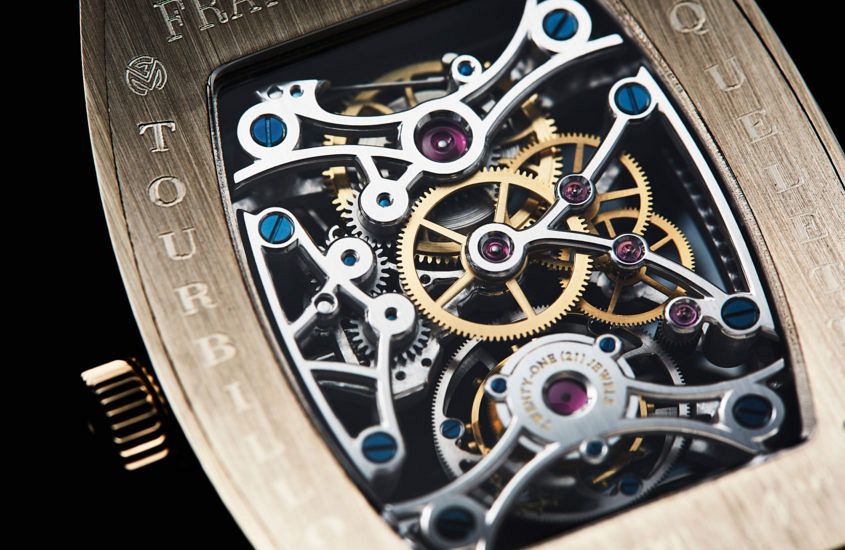 Jewels are typically things you imagine adorning lavishly dressed socialites, or existing in piles that form the sleeping places of greedy dragons, so why are they so important in watchmaking? The reason is not frequently talked about, despite the number of jewels in a movement being communicated as a standard piece of mechanical information, and generally an indication of the quality of the movement. But it still begs the question: why are there jewels in a watch? As they discuss, the main reason for them is not decorative, but the properties of their synthetic mineral hardness. Apart from diamond, rubies are one of the hardest materials in the world, making them perfect to reduce friction in the gear train of the movement. Without them, the increased resistance in the movement would not only make the watch less accurate, but also increase the frequency the watch required servicing. This is a good thing for watch owners, as generally the happiest visits to your nearest boutique are because of a new purchase, not because your watch stopped working. Read the full article here.
The post RECOMMENDED READING: Why are there jewels in a watch? appeared first on Time and Tide Watches.

What have we been reading this week? It’s all in here…

Like all the seven watches presented over the past seven months to fête the Lange I, the Daymatic is dressed for the party in a white gold case with blue trimmings on the dial. As you know, the Saxon brand is celebrating the quarter-century of its foundation watch with not one but ten models. A […]
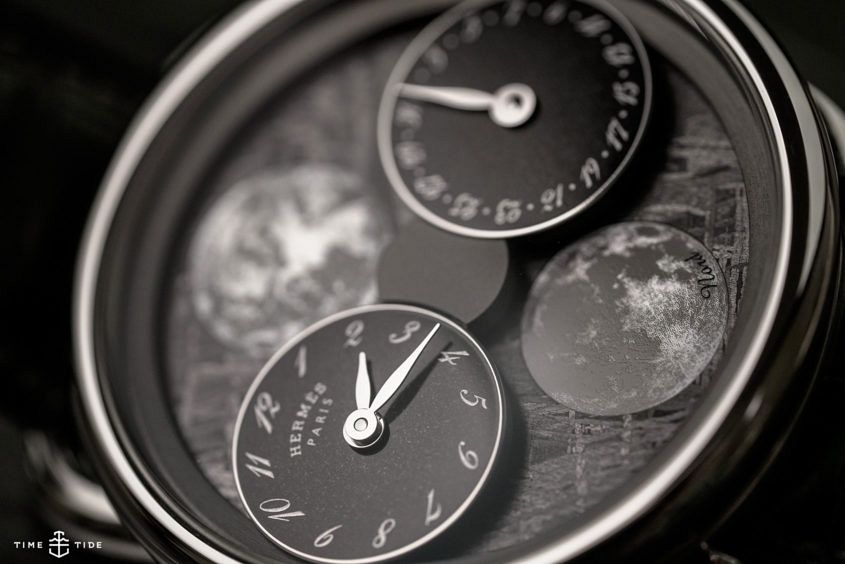 There’s an inherent romance in all mechanical wristwatches — a romance drawn largely from the fact that these painstakingly created devices are fundamentally anachronistic machines that have been superseded several times over. Yet, still they manage to survive and, indeed, thrive. And it might just be me, but this romance factor is more present than ever when it comes to watches with celestial complications because — and let’s be real here — no one *needs* a moonphase in 2019. This fact is why the people who design and create this very traditional complication tend to show a bit of creative license. Such license was the name of the game in the montres department of the grand maison Hermès when they created the Hermès Arceau L’heure de la lune, which offers not one, but two moon phases (southern and northern hemispheres, don’t you know). You see, rather than moving the moons around the dial, Hermès have made the dials do the work. The time and date subdials sit above the base dial (of either meteorite or aventurine, two appropriately celestial materials) and, over the course of a month (or 28.5 days if you’re a pedant) revolve around the dial, obscuring or…
The post HANDS-ON: The Hermès Arceau L’heure de la lune appeared first on Time and Tide Watches.
 A lot of new watches are released every year. Big brands will often release 100 or more new unique variants (and fair enough, different dial/strap/material, etc take up a lot of this space), but even so, it’s fair to say that not every new watch gets its time in the sun. Sometimes that’s OK, as we’re talking about minor, or sometimes downright uninteresting updates. But sometimes otherwise excellent watches slip through the cracks. It’s worth noting that the more diffuse release schedule, especially from Swatch Group brands, means that we’re not seeing the same major release moments, which is a double-edged sword. There’s more oxygen around some releases, but the near-continuous dropping of new novelties does lead to fatigue. But luckily we’re here, shining a light on the sleeper hits of 2019 … so far. Omega Seamaster Diver 300M First cab off the rank comes from none other than Omega. Omega showed their major releases a little later than usual, at Time to Move in May. Even so, it’s fair to say that the hero releases were their Apollo 11 Anniversary pieces, and the new Seamaster Chronographs. The one that won my heart though was a simple new white-dialled variant of…
The post You might have missed these 6 excellent new watches – these are the sleeper hits of 2019 appeared first on Time and Tide Watches.
A lot of new watches are released every year. Big brands will often release 100 or more new unique variants (and fair enough, different dial/strap/material, etc take up a lot of this space), but even so, it’s fair to say that not every new watch gets its time in the sun. Sometimes that’s OK, as we’re talking about minor, or sometimes downright uninteresting updates. But sometimes otherwise excellent watches slip through the cracks. It’s worth noting that the more diffuse release schedule, especially from Swatch Group brands, means that we’re not seeing the same major release moments, which is a double-edged sword. There’s more oxygen around some releases, but the near-continuous dropping of new novelties does lead to fatigue. But luckily we’re here, shining a light on the sleeper hits of 2019 … so far. Omega Seamaster Diver 300M First cab off the rank comes from none other than Omega. Omega showed their major releases a little later than usual, at Time to Move in May. Even so, it’s fair to say that the hero releases were their Apollo 11 Anniversary pieces, and the new Seamaster Chronographs. The one that won my heart though was a simple new white-dialled variant of…
The post You might have missed these 5 excellent new watches – these are the sleeper hits of 2019 appeared first on Time and Tide Watches.
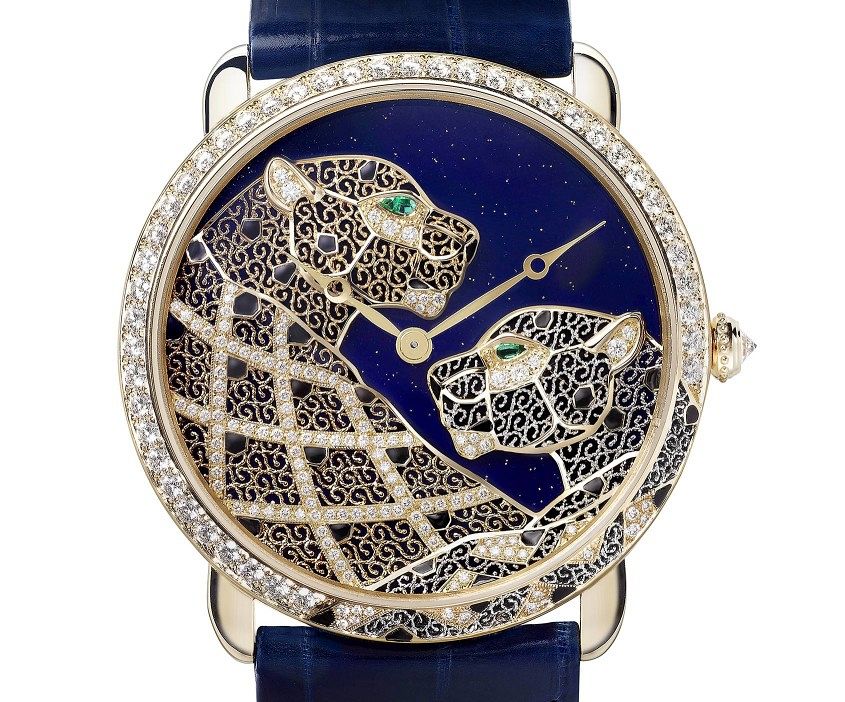 Editor’s note: Why is this unassuming looking farmhouse in the Swiss countryside so important to a brand as large as Cartier? Because it houses the workshop for Cartier’s Maison des Métiers d’Art, sanctuary to a set of artistic skills and techniques that are hundreds of years old. It is in this farmhouse that some of the most skilled craftspeople in the world are tasked with painstakingly producing the high-jewellery part of Cartier’s collection. Cartier’s Maison des Métiers d’Art It is impossible to overstate the importance of tradition to the Swiss watch industry. It’s a business, after all, built on skills and techniques that by all rights have no place in the 21st century. Watchmakers in general are a rare and special breed. Fewer still are experts in the more specialised artistic crafts such as marquetry and enamelling, which places their talents in high demand. Collectively, these artisanal disciplines are referred to as Métiers d’Art, and Cartier is leading the way in preserving and fostering these nearly forgotten skills through the Maison des Métiers d’Art. Based in an 18th century Bernese-style farmhouse, a short walk from their main fine watchmaking facility, the Maison des Métiers d’Art is the perfect expression of…
The post Keeping tradition alive at the Cartier Métiers d’Art appeared first on Time and Tide Watches.