Why a man of style loves the Montblanc 1858 Automatic Dual Time
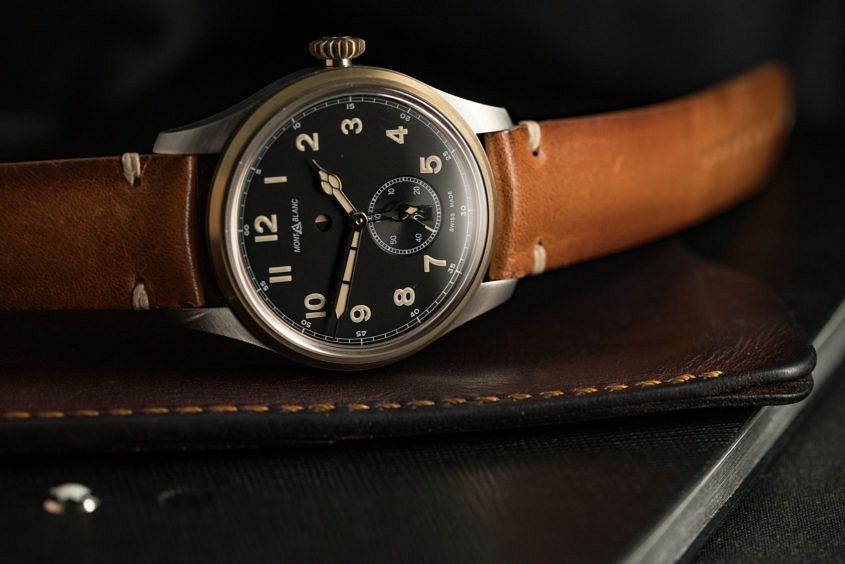 Editor’s note: This is a throwback to the time we chatted to one of the best-looking blokes in Melbourne about his (then) new Montblanc 1858 Automatic Dual Time. As Sam predicted, he didn’t think this would be a watch that would look dated as the years passed, and he was right — the classic proportions, the cathedral hands and warmth from the bronze bezel all contribute to a sense of timelessness. The Montblanc 1858 Collection was launched in 2015, and the heritage styling of the family of watches has endured to their latest releases at SIHH 2019, with bronze cues also remaining as a motif. Though he’s had it for a few years now, it’s hard to imagine that Montblanc isn’t still taking up a good portion of Sam’s wrist real estate. We don’t want to blow Sam’s cover, because My Watch Story subjects are guaranteed a high degree of anonymity. But let’s just say, Sam might not have ever seen you, but if you’re partial to a wide, wide range of clothing brands – most recently UNIQLO – you will probably have seen him. However, it’s not his photogenic features in the frame today, it’s his no less photo-friendly wrist…
The post Why a man of style loves the Montblanc 1858 Automatic Dual Time appeared first on Time and Tide Watches.

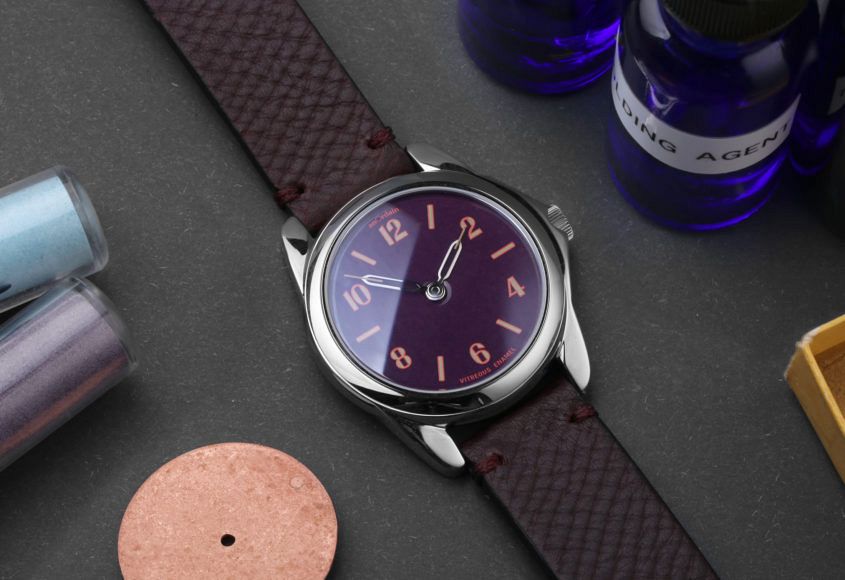 An enamel dial elevates a watch to a different level, whether it comes in the form of a brightly coloured world map, a hyper-realistic image of a flower, a jewel-toned expanse of colour that seems to float above a textured base, or an ethereal grey-scale image of a lion – accurate to the last tuft of fur. Its beauty speaks volumes for the skill of its creator. Because enamel is really darned hard to do – let alone do well – no matter which enamel technique it is. (The examples I just listed are, respectively, cloisonné, miniature-painting, flinqué – or, in Japan, shippo – and grisaille. There are more.) But, counter-intuitively, one of the hardest of all to master is the most subtle, the least “wow, that obviously took incredible skill” technique. I’m talking about the plain white (or less often seen, black or a single colour) grand feu enamel dial. To quote that truism of design, simple things are always the hardest to do well. (Sub-text: if you make a mistake, there’s nowhere to hide). The mirror-perfect finish demanded of a plain grand feu enamel dial sends that simple-hard challenge off the scale. That has a lot to do…
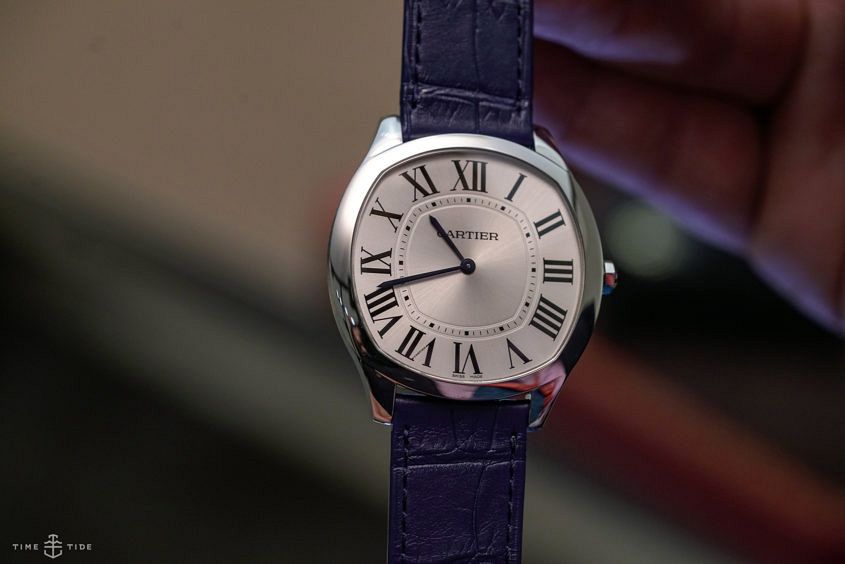 There comes a time in the journey of every watch collector when the pursuit of the most complicated watch loses its shine, as you start to wonder if there is real meaning to be found by having a ninth tourbillon in your watch. You stop stressing if your chronograph has a vertical clutch, and wonder if you will remember the tide-indicator complication on your watch as you lie on your death bed. To yearn for something simpler, something that just tells you the time is perfectly natural, and surely in part a reason why designs that are classic and timeless are often more simple than complex. As the great man Antoine de Saint-Exupéry once said, “Perfection is achieved, not when there is nothing more to add but when there is nothing left to take away”, leading me nicely to compiling a list of the best two-handed watches of 2018. SWATCH SKIN IRONY “SKINSPRING” Spring is a time of new beginnings and warmer weather. And at only 5.8mm thick, Swatch have created the first metallic version of its slimmest watch. While there are eight brand-new different models available in the Skin Irony collection – all featuring different straps, dials, and case…
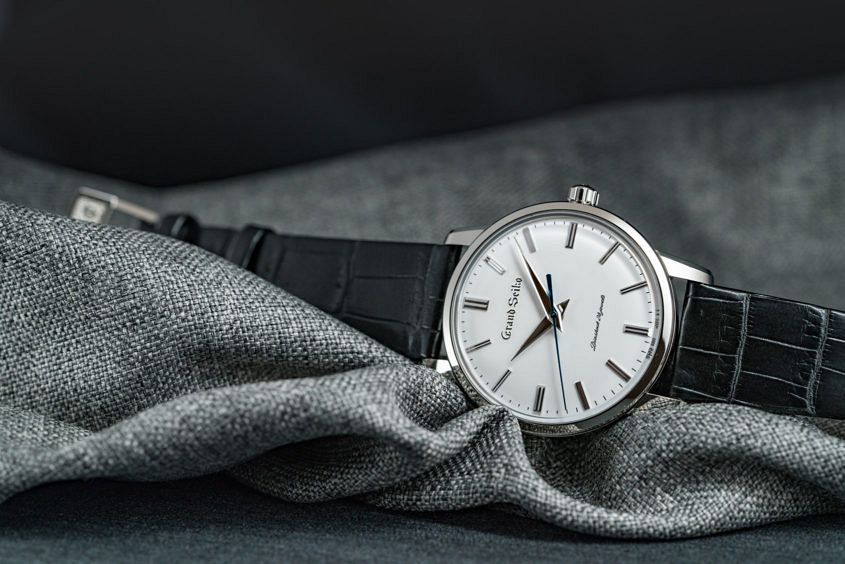 Editor’s note: Being first is important. It awards you the privilege of being looked back on as the original, the source of all that follows you, and an example of the maverick intent that got things started. For Grand Seiko, their prototypical watch was released in 1960, an expression of cleanly refined classicism that established the foundation of the brand as we know it today. Unpretentious, accurate, and a level of finishing that approaches perfection. In 2017 Grand Seiko decided to pay tribute to that first example made in the Suwa Seikosha factory, and produced a steadfast reissue that is as attractive as its ancestor. Produced in steel, yellow gold and platinum, these watches offer an interesting point of comparison to their modern watches, showing just how the Grand Seiko design language has evolved over the last half century. Grand Seiko reissue their first ever watch, plus a completely new re-interpretation Watch brands love nothing more than an anniversary. You might even be forgiven for thinking that marketing departments devote a substantial amount of energy to finding ever more obscure historical events, products or personages to commemorate with a new limited edition: 56 years since the release of our mildly popular…


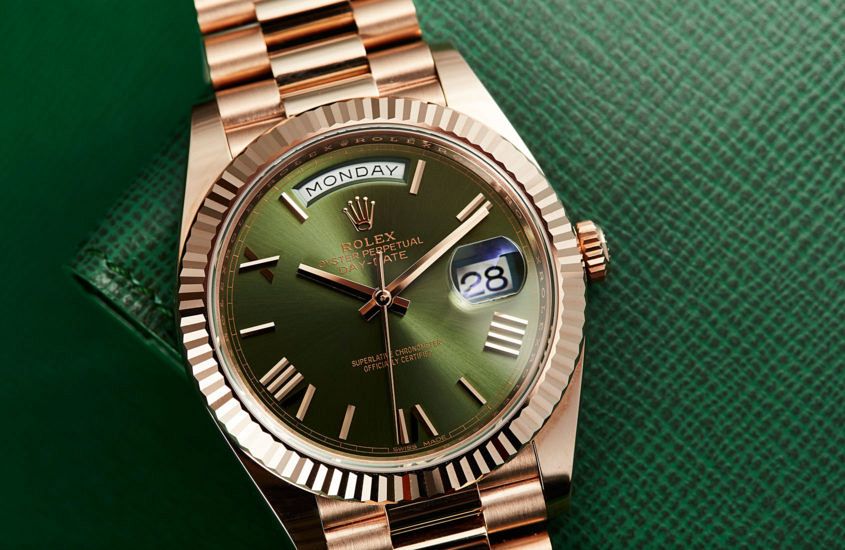 Editor’s note: While #BlueWatch Monday has inspired 24,000+ posts on Instagram, I wanted to start the week with a watch in the same chromatic neighbourhood, specifically the Rolex Day-Date 40 with olive green dial. Without a doubt, this has to be one of the best-looking Day-Dates that Rolex has ever produced (yes, I said one of the best, Mirka), with the warmth of the olive green sunburst dial perfectly complementing the radiant Everose gold case and bracelet. The other detail Rolex nailed with this watch is the faceted Roman numerals, which catch and reflect the light in the same way the bezel does. A very special watch to celebrate the 60th Anniversary of this iconic timepiece. It’s no real surprise that Rolex — the world’s most reputable brand — is a class act. For me this was proven when I saw the beautiful new green-dialled Day-Date 40 on the first day of this year’s Baselworld fair. That class factor was cemented when I discovered the watch was available in stores on the very same day of its release. Not many brands could pull off a move that smooth. On the surface, this is a new variant of last year’s Day-Date 40…