
Found – A Unique IWC Ingenieur 666A (and the story of how it came to life)
With the vintage market and auctions in full hype-mode these days, we often hear the words “unique” or “never-seen-before” to talk about a watch with one small detail to differentiate it from the rest of the crowd. However, we’re quite confident in saying that you’ve never seen what we’re about to show you: a truly unique, truly legit and truly interesting IWC Ingenieur 666A (the first generation of this model). And for once, we have all shreds of evidence that it was born this way, back in 1965, as a special order to IWC – and before you ask, no it isn’t for sale (or not yet at least).


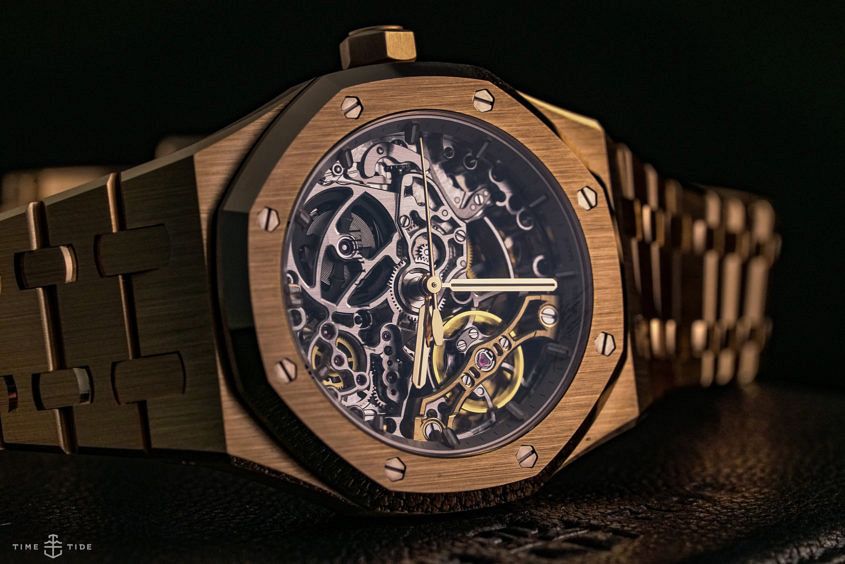 Editor’s note: In case you missed it, this week we were told that from 2020 onward, both Richard Mille and Audemars Piguet would no longer be showing at Salon International de la Haute Horlogerie (SIHH), as they shift their focus 100 per cent to their boutiques and customers, and look to spread their releases throughout the entire year. Well, needless to say, the news had us feeling a little down in the dumps. I’m not sure if this is going to help or hinder, but now seems as good a time as any to look back in delight at one of AP’s best: the Royal Oak Double Balance Wheel Openworked. One of the finest openworked watches on the market right now (and one that, paradoxically, didn’t make our list of skeletonised watches) is the Royal Oak Double Balance Wheel Openworked from Audemars Piguet. Visually, this pink gold case with predominantly steel movement architecture is everything you’d expect — that classic RO case and bracelet looking boss, with a deep, complex openworked dial. And while legibility is the main concern here (there’s not a heap of contrast between the movement and those gold hands, compared to earlier versions with a grey movement…
 Tantalum, what’s that, I hear you say. Well, allow me to explain. Tantalum is a highly corrosion-resistant bluish-grey metal with an extreme hardness and high boiling point. Which are the exact qualities you want in a dive watch, but also qualities that make Tantalum incredibly difficult to work with – and the reason why the material is not often seen in the watch industry. However, when Omega first released the Seamaster Diver 300M in 1993, their flagship model was a tri-coloured chronograph (ref 2296.80) that included a case made from titanium, tantalum, and rose gold. Twenty-five years later, the combination is back, only now it’s without the chronograph, and it features a host of modern updates. At quick glance, the limited edition looks quite similar to its regular collection siblings. But there’s a lot more going on here than first meets the eye. First of all, and most obviously, the bezel insert is 18k Sedna gold, with a frosted finish that tones things down and sets the stage for the muted grey titanium dial – with its laser-engraved wave pattern raised rather than etched into its darkened surface. There’s also no date, but there is a set of familiar 18k…


